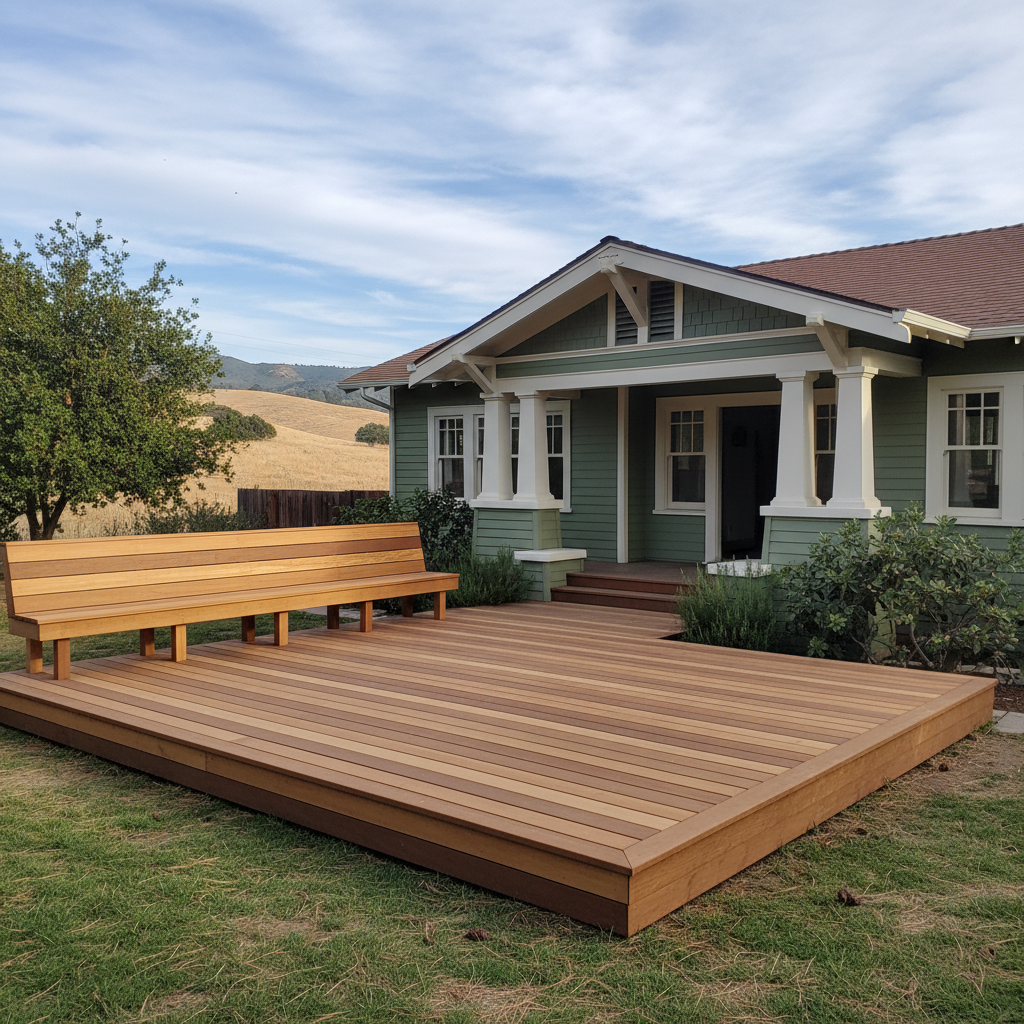
A deck looks like a carpentry project. It's actually a structure hanging off the side of your house, usually holding up a grill, a hot tub, or a few hundred pounds of people standing near the rail at once. Most of what goes wrong with decks doesn't show up for years, which is exactly why the person you hire matters more than the quote they hand you.
Rocklin has its own quirks that make this worse if you skip the wrong steps. Here's what to actually look at before you sign anything.
What Rocklin's ground does to a footing
The name Rocklin isn't an accident. A lot of lots here, especially around Sunset Whitney, Clover Valley, and the older grid near downtown, sit on shallow soil over hardpan or granite. You can dig a clean post hole two feet down in some yards and hit rock that needs a breaker bar or a rented jackhammer to get through. Builders who only work in sandy valley soil sometimes underbid this part because they've never had to deal with it.
Code generally wants a footing 12 to 18 inches below grade depending on the load and the beam span, resting on undisturbed soil, not fill. In rocky ground that sometimes means a shallower, wider footing poured on bedrock instead, or a surface-mounted post base anchored into the rock itself. Either works if it's engineered for the load. What doesn't work is a contractor who skips the dig entirely and sets posts on a paver because the ground was hard to break through.
Permits and the inspections that actually matter
If you're inside city limits, Rocklin's building department issues the permit. If you're in the unincorporated edges, it's Placer County. Either way, a deck attached to the house, or one more than 30 inches above grade, almost always needs a permit and a set of stamped plans or at least a detailed framing plan.
Two inspections matter more than the rest. The footing inspection happens before concrete goes in, so the inspector can see the hole and the rebar, not a photo of it after the fact. The ledger inspection checks how the deck is actually bolted to your house, lag screws or through-bolts into the rim joist, with flashing over the top to keep water from running behind it and rotting the band board. Ledger failure is still the most common cause of deck collapse nationally, and it's almost always because someone nailed it instead of bolting it, or skipped the flashing.
A lot of the newer subdivisions out here, Whitney Ranch and Stanford Ranch among them, also have an HOA architectural committee that wants to approve the design, the railing style, and sometimes the stain color before you break ground. Ask your builder if they've dealt with your HOA before. If they haven't, ask if they'll handle the submission or if that's on you.
What a real bid should have in it
A bid that just says "build 300 sq ft deck, composite decking, $X" is missing the parts that let you compare it to anything. Ask for the joist size and spacing, usually 2x8 or 2x10 at 16 inches on center depending on span, the beam size, the post spacing, and whether the hardware is hot-dip galvanized or stainless. Coastal-grade fasteners aren't strictly necessary here the way they are near the ocean, but anything touching treated lumber still needs hardware rated for it, or the screws corrode from the inside out within a few years.
If composite decking is part of the plan, ask about gapping. Composite boards expand and contract with heat, and Rocklin summers regularly sit above 100°F in July and August. Boards installed tight in August can buckle by October when they cool and shrink, or the reverse if they're gapped too wide in winter. A builder who's done this before knows the manufacturer's gap spec and adjusts it slightly for the install temperature that day.
If it's wood and staining is part of the job, timing matters too. Oil-based sealers don't cure right when it's 100 degrees and bone dry, which is most of July and August here. Spring and fall, when it's milder and the rainy season hasn't started, is when that work actually holds.
Red flags worth walking away from
- No permit mentioned at all for an attached deck, or a vague "we'll handle it" with no timeline.
- A ledger attachment plan that's just nails, or no flashing detail mentioned when you ask.
- A price that's dramatically lower than two others for the same square footage and the same material. Someone's cutting footing depth, fastener grade, or both.
- No mention of how they'll deal with rock if they hit it. If they haven't asked about your soil, they haven't planned for it.
- Reluctance to give you the beam and joist sizing in writing. This is basic information any legitimate framer has on hand before they order lumber.
What the rainy season reveals
Rocklin's wet months run roughly November through March. That's when a deck with bad flashing or poor drainage starts to show it, water staining on the band board, soft spots near the ledger, standing water under the deck where grading was never addressed. If you're looking at a deck that's a few years old and deciding whether to repair or replace, this is the season to have someone look at it, because the problems are visible instead of hidden under a summer's worth of dry wood.
A good builder will walk your yard, tell you what the soil's going to do to the footings, pull the permit without being asked twice, and give you a bid with real numbers on it instead of a single line item. That's most of what separates a deck that's still solid in fifteen years from one that needs the joists replaced in five. If you want to talk through what a project like this looks like on your lot, Excellence Deck Inc is a good place to start.